
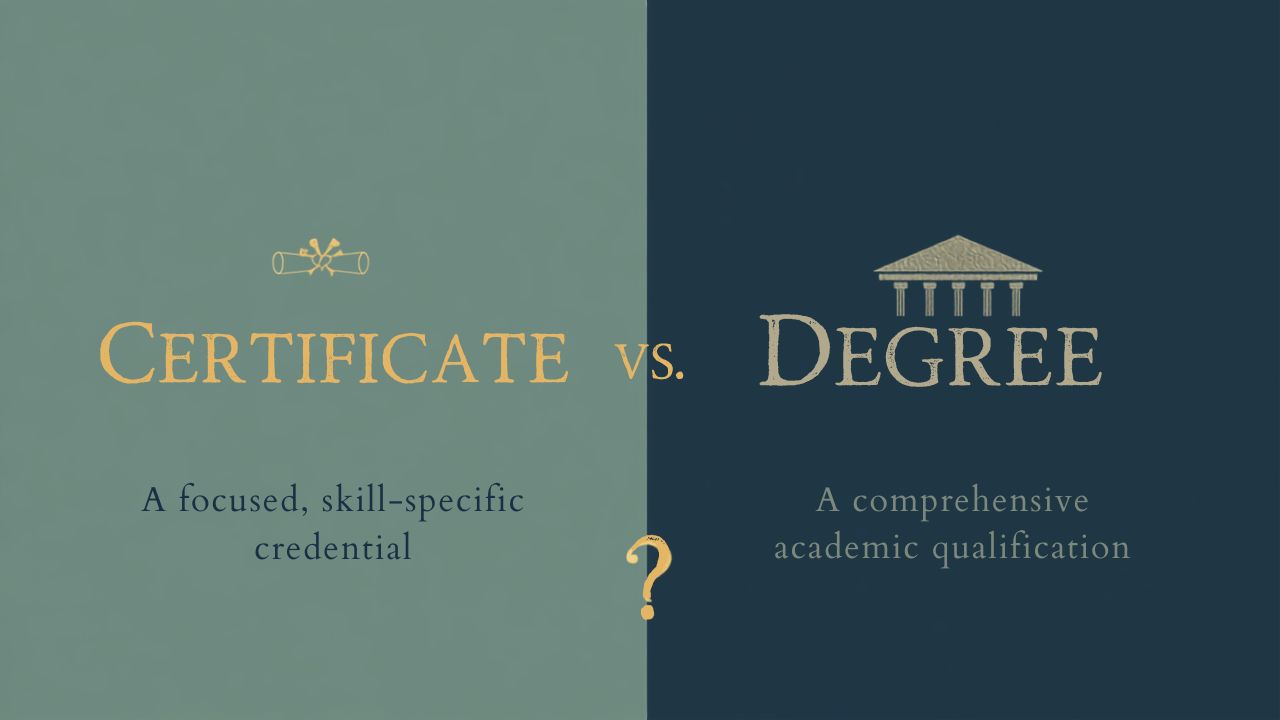
For years, getting a university degree was seen as the best way to a successful career. It opened doors to better jobs, higher salaries, and greater professional respect. Today, however, the employment landscape has changed. Employers are placing increasing emphasis on practical skills, adaptability, and continuous learning. Many professionals are wondering: Should I get another degree or focus on certifications?
The answer is not universal. Degrees and certifications both have value. Your best choice depends on your career goals, industry, experience, and the skills employers want.
A degree provides a broad educational foundation. Undergraduate and postgraduate programs focus on developing analytical thinking, problem-solving skills, communication abilities, and subject knowledge. They usually need several years of study and cover a wide range of topics within a discipline. Degrees bring long-term recognition. They are often required for careers in medicine, law, engineering, teaching, research, and public administration.
Certifications are designed to validate specific skills or competencies. They are usually shorter, more focused, and aligned with industry needs. Certifications in fields like project management, cybersecurity, and cloud computing show that professionals have up-to-date skills. This applies to digital marketing, financial analysis, and human resources, too.
One major difference between degrees and certifications is the time they take. A university degree usually takes two to four years. In contrast, many professional certifications can be done in weeks or months. For working professionals, a shorter learning cycle is appealing. It lets them upgrade their skills without needing a long break from work.
Cost is another important factor. University education usually has high tuition fees. You also pay for accommodation, books, and other expenses. Certifications usually cost less, so more learners can access them. This smaller investment cuts financial risk if a professional chooses to switch careers.
Employers value certifications because they often reflect current industry practices. Technology evolves, and university curricula may take time to adapt. Certification providers update their programs. This helps them stay current with the latest tools, standards, and methods. Certified professionals stand out in fast-changing fields. These include information technology, cloud computing, cybersecurity, artificial intelligence, data analytics, and digital marketing.
However, certifications are not always a substitute for a degree. Many organizations still need formal academic qualifications for leadership and specialized roles. In fields like medicine, architecture, accounting, and higher education, degrees are crucial. Certifications can’t replace them.
Another consideration is career stage. A university degree helps newcomers start strong in their careers. It opens many doors for them. Employers use academic qualifications as an initial screening criterion for entry-level hiring.
For experienced professionals, the equation changes. After a few years of work experience, employers look for performance and skills. They care more about leadership and achievements than extra degrees. Carefully chosen certifications can give professionals a better return on investment. They help keep skills competitive and relevant.
The pace of technological change has also transformed learning itself. New software, regulations, business models, and digital tools emerge every year. Professionals who only use what they learned in university might see their skills fade over time. Continuous learning is now essential for career growth. Certifications, workshops, online courses, and self-study all play a key role.
Another advantage of certifications is flexibility. Professionals can earn several certifications. Each one boosts their skills in a specific area. This modular approach lets people customize their learning as their career goals change. A marketing pro can start by getting a digital advertising certification. Then, they might focus on data analytics. Finally, they can build skills in artificial intelligence—no need to go back to university for another degree.
Nevertheless, degrees offer benefits that extend beyond technical knowledge. University education helps students with research, critical thinking, teamwork, ethics, communication, and learning across different fields. These broader competencies contribute to long-term leadership development and career advancement.
The best career strategy isn’t picking between degrees and certifications. It’s about combining them smartly. A degree gives you a strong educational base. Certifications show that your knowledge is up-to-date and relevant. They build a profile that draws in employers seeking academic skills and practical experience.
Before making a decision, ask yourself a few important questions. Does your target job require a formal degree? Are employers in your industry asking for specific certifications? How much time and money are you prepared to invest? Which option is likely to improve your employability within the next one to three years? Most importantly, which path aligns with your long-term career aspirations?
There is no one-size-fits-all answer. A recent graduate might get more from a postgraduate degree. In contrast, a mid-career professional could find more value in earning industry-recognized certifications. Someone planning to move into management might pick an executive education program. A tech professional may benefit more from updating certifications.
In today’s knowledge economy, learning never ends. Degrees build a career foundation. Certifications keep that expertise relevant. The professionals who achieve the greatest career success are rarely those with the longest list of qualifications—they are the ones who continue learning, adapting, and applying new knowledge throughout their careers.
Instead of asking if a degree is better than a certification, think about this: Which choice offers the most value for you, your employer, and your future career?
Join the Tutors4You.in Community
Every learning journey is unique, and the right guidance can make all the difference. Tutors4You.in supports your goals by connecting you with expert tutors. We’re here to help you succeed, whether you want to excel in your studies, gain new skills, or prepare for exams.
Tutors can make a FREE Digital CV. The CV highlights their qualifications, experience, subjects, and teaching skills. This helps students, parents, schools, coaching institutes, and organizations find qualified tutors. These tutors teach a wide range of subjects. These include academics, competitive exams, languages, technology, arts, music, and professional skills.
Learning never stops, and neither do opportunities to grow. Join the Tutors4You.in community today! Be part of a platform focused on learning, teaching, and collaboration. Looking to teach, learn, or find teaching talent? Your next opportunity is a click away.